
Introduction
You have probably watched the news and wondered: how old is Vladimir Putin, and how does he still hold one of the most powerful positions on the planet? The question feels simple. But the answer opens a door to one of the most fascinating political stories of the modern era.
The age Vladimir Poutine is a topic that draws millions of searches every year. People are not just curious about a number. They want to understand the man behind it. They want to know how someone born in a modest Soviet apartment in 1952 became the most discussed, most feared, and most analyzed leader of the 21st century.
Vladimir Putin was born on October 7, 1952, in Leningrad, which is now called Saint Petersburg. That makes him 72 years old in 2025. But his age is only the starting point of a much bigger story.
In this article, you will discover everything worth knowing about the age Vladimir Poutine, his background, his rise to power, his personal life, his health, and what the future may hold for Russia when he is no longer in charge. Let us dive in.
The Age Vladimir Poutine: Birth, Childhood, and Early Life
Vladimir Vladimirovich Putin came into the world on October 7, 1952. His birth city, Leningrad, was still recovering from one of the most devastating military sieges in human history. The city had endured nearly 900 days of German blockade during World War II. By the time Putin was born, the physical and emotional scars were still very much visible.
His father, Vladimir Spiridonovich Putin, worked as a factory laborer in the Soviet naval industry. His mother, Maria Ivanovna Shelomova, took on various low-paying jobs to help the family survive. The family lived in a small communal apartment with no hot water and very limited resources. There was nothing glamorous about his early years.
Putin was the third son in the family, though his two older brothers died before he was born. One passed away in infancy and the other died during the Leningrad siege. He grew up as an only child, shaped by the grief and resilience that surrounded him.
These early experiences matter enormously when you try to understand the age Vladimir Poutine and what it represents. His childhood was defined by scarcity, survival, and a deep sense of Soviet patriotism. Those values never left him.
Key early life timeline:
October 7, 1952: Born in Leningrad, Soviet Union 1960: Starts primary school in Leningrad 1965: Begins practicing judo and sambo martial arts 1970: Enrolls at Leningrad State University, faculty of law 1975: Graduates and joins the KGB at age 23
Age Vladimir Poutine and His Years in the KGB
One of the most defining chapters in understanding the age Vladimir Poutine is his career in Soviet intelligence. At just 23 years old, he joined the KGB, the feared Soviet security and intelligence agency. He would spend the next 16 years working within that system.
His early KGB work was largely administrative and counterintelligence-focused. But the most significant chapter came in 1985, when he was posted to Dresden, East Germany. He was 33 years old. His mission was to recruit informants and gather intelligence on Western targets.
He lived in Dresden for five years. In 1989, he witnessed the fall of the Berlin Wall firsthand. He was 37 at the time. When an angry crowd began gathering outside the local KGB headquarters, Putin reportedly called Moscow for instructions. The response, according to various accounts, was silence. Moscow had abandoned its outposts. That moment stayed with him permanently.
He left the KGB in 1991, just as the Soviet Union was collapsing. He was 39 years old. He returned to Saint Petersburg and began working in local government under Mayor Anatoly Sobchak.
What those 16 years in intelligence gave him was not just operational experience. They gave him a worldview. He learned how power works in the shadows. He learned patience, strategy, and total discipline. Every analyst who studies the age Vladimir Poutine and his behavior in office points back to those KGB years as the foundation of everything.
From Unknown Official to President: Age Vladimir Poutine at the Moment of His Rise
Most people outside Russia had never heard of Vladimir Putin before 1999. He was a relatively obscure figure in Saint Petersburg politics before being brought to Moscow in 1996 to work in the Presidential Administration.
By August 1999, President Boris Yeltsin appointed him Prime Minister. Putin was 46 years old. Yeltsin, visibly ill and politically weakened, was looking for a loyal successor who could protect the system he had built. He found that person in Putin.
On December 31, 1999, Yeltsin resigned in a surprise televised announcement. Putin, at 47, became acting president of the Russian Federation. He was elected in his own right on March 26, 2000. He received approximately 53 percent of the vote in the first round.
Russia at that moment was a country in serious trouble. The economy had collapsed following the 1998 financial crisis. The war in Chechnya was brutal and unresolved. Oligarchs controlled vast swaths of the economy. Organized crime was rampant. The military was underfunded and demoralized.
Putin moved quickly to restore central authority. He neutralized political opponents. He brought major media outlets under state control. He restructured the relationship between the federal government and regional governors. And he used rising oil prices to stabilize and grow the Russian economy.
Within four years of taking power, his approval ratings had climbed above 70 percent. He was reelected in 2004 with 71 percent of the vote. He was 51 years old.
Here is a quick breakdown of his age at each major political milestone:
47 years old: First becomes acting president of Russia 47 years old: Elected president in March 2000 51 years old: Reelected for a second term in 2004 55 years old: Steps down to become Prime Minister due to term limits 59 years old: Returns to the presidency in 2012 after Medvedev’s term 65 years old: Reelected again in 2018 with over 76 percent of the vote 69 years old: Orders the full-scale invasion of Ukraine in February 2022 71 years old: Reelected for a fifth presidential term in March 2024
Health and Physical Condition: What the Age Vladimir Poutine Tells Us
No discussion of the age Vladimir Poutine would be complete without addressing the persistent rumors and questions about his health. For years, journalists, medical professionals, and intelligence analysts around the world have scrutinized his public appearances for signs of illness or decline.
Some of the most commonly discussed observations include puffiness in his face, a rigid posture during certain appearances, occasional tremors in his hands, and unexplained absences from public view. Speculation has ranged from Parkinson’s disease to thyroid cancer to blood cancer. None of these have been officially confirmed.
The Kremlin consistently dismisses all health-related rumors. Its official position is that Putin is in excellent health and fully capable of performing his duties.
What we know with confidence is that Putin makes a consistent and very deliberate effort to project physical strength. He has been photographed and filmed practicing judo, swimming in icy rivers, riding horses shirtless, playing ice hockey, and piloting fighter jets. These are not accidental photo opportunities. They are carefully staged performances designed to communicate power, vitality, and dominance.
At 72 years old, he appears to remain physically active. Whether his health is exactly as the Kremlin presents it is impossible to verify from the outside. But the attention paid to his physical appearance is itself a reflection of how much the age Vladimir Poutine matters on the world stage.
If he were to become incapacitated or die suddenly, the geopolitical consequences would be enormous. Markets would react. Conflicts would potentially shift. Russia’s internal power structure would face its most serious test in decades.
Personal Life: Marriage, Family, and What Putin Kept Private
Understanding the age Vladimir Poutine also means understanding the personal choices he made along the way. Putin married Lyudmila Shkrebneva in July 1983. He was 30 years old. She was a flight attendant from Kaliningrad whom he had met a few years earlier.
Together they had two daughters. Maria Vorontsova was born in 1985, and Katerina Tikhonova was born in 1986. Both daughters have kept extremely low public profiles throughout their lives, using different surnames and avoiding media attention.
After 30 years of marriage, Putin and Lyudmila announced their divorce in June 2013 during a live television broadcast following a ballet performance. Putin was 60 years old. The divorce was described as mutual and civilized. No scandal was publicly acknowledged.
Since then, his romantic life has been a subject of intense speculation. Investigative outlets including Meduza and Proekt have published detailed reporting linking Putin to Alina Kabaeva, a former Olympic rhythmic gymnastics champion and current politician in Russia. Reports have suggested they have children together, but the Kremlin has never confirmed any of this.
His ability to maintain such extreme personal privacy at the highest level of global visibility says something important about how he manages information and controls narrative. At 72, he is as opaque as ever.
The Question of Succession: What Happens After the Age Vladimir Poutine Era Ends
Among geopolitical experts and Kremlin watchers, no question generates more anxiety than this one: what happens when Putin is gone?
The 2020 constitutional amendments reset his term limits entirely, allowing him to serve until 2036. If he completes that term, he will be 83 years old. That would make him one of the longest-serving leaders of a major power in modern history.
But no one rules forever. And Russia’s political system has been so thoroughly shaped around one man that the absence of that man would create a vacuum with no obvious mechanism to fill it.
Several names consistently emerge in expert discussions about potential successors:
Nikolai Patrushev: Former FSB director and longtime security insider Sergei Sobyanin: Mayor of Moscow and respected administrator Alexander Bortnikov: Current director of the FSB Mikhail Mishustin: Sitting Prime Minister known for administrative competence Nikolai Mishustin: No formal political heir has been publicly groomed
The lack of a clear succession plan is itself a feature of the Putin system, not a flaw. He has deliberately ensured that no one accumulates enough independent power to challenge him. That is how he has survived for 25 years.
The age Vladimir Poutine is not just a biographical detail. It is a geopolitical variable. When his era ends, whether through death, illness, or a political rupture, the consequences will be felt across the entire world.
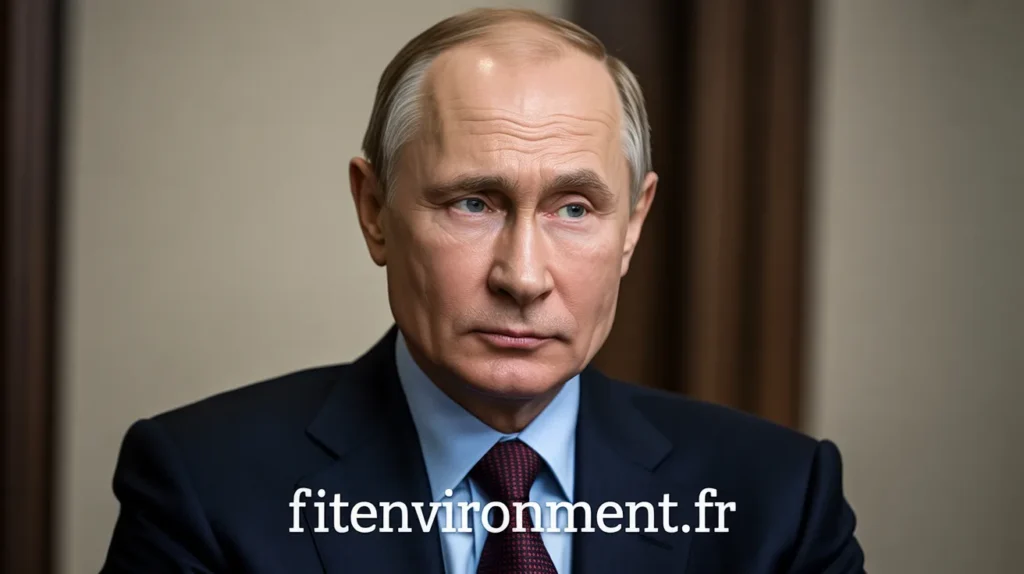
Putin Among World Leaders: A Generational Comparison
To truly appreciate what the age Vladimir Poutine means in context, it helps to compare him to other major figures of his era.
Xi Jinping, China’s president, was born in 1953, just one year after Putin. The two men share a worldview shaped by ideological conviction and a deep suspicion of Western power. They have formed a close strategic partnership in recent years.
Joe Biden, who served as U.S. president until early 2025, left office at age 82. His age was a major subject of domestic political debate in the United States, with many critics arguing he was too old to govern effectively.
Emmanuel Macron of France is 47 years old, a full generation younger than Putin. He represents a newer wave of Western political leadership.
What makes Putin genuinely exceptional is not his age alone. It is the combination of age and duration. He has been at the top of Russian power for 25 consecutive years. Very few leaders in modern democratic or authoritarian systems have matched that kind of staying power.
Why the World Keeps Searching for the Age Vladimir Poutine
You might wonder why so many millions of people search specifically for the age Vladimir Poutine online every year. The answer says something interesting about how we process power and leadership.
When we search for a leader’s age, we are really asking deeper questions. We want to know how long they have left. We want to understand whether they are acting rationally or with the desperation of someone who senses their time is running out. We want to know if the world will look different in ten years.
In Putin’s case, those questions are not abstract. They connect directly to active wars, nuclear arsenals, energy markets, and the lives of millions of people across Europe and beyond.
His age shapes his risk tolerance. His age shapes his sense of historical legacy. His age shapes the urgency or patience with which he pursues his goals. Understanding the age Vladimir Poutine is, in many ways, understanding the timeline of one of the most consequential geopolitical stories of our lifetimes.
Conclusion
The age Vladimir Poutine is 72 in 2025. But that number carries the weight of a life that has spanned the Soviet Union, the chaos of its collapse, and the construction of a new Russian state built entirely around one man’s vision and will.
From a modest Leningrad apartment to the halls of the Kremlin, from a junior KGB officer in Dresden to the most discussed leader on the planet, Putin’s journey is unlike almost anything in modern political history.
What his age tells us most clearly is this: time is the one variable that even the most powerful leaders cannot control. The age Vladimir Poutine is climbing. And the world is watching closely to see what comes next.
If you found this article useful, share it with someone who wants to understand global politics more deeply. And tell us: do you think Putin’s age is changing the way he governs? Drop your thoughts in the comments below.
Frequently Asked Questions
- What is the age Vladimir Poutine in 2025? Vladimir Putin is 72 years old in 2025. He was born on October 7, 1952, in Leningrad, which is now called Saint Petersburg, Russia.
- How long has Vladimir Putin been in power? Putin has been in power since 2000, giving him more than 25 years at the top of Russian politics. He served as president from 2000 to 2008, as Prime Minister from 2008 to 2012, and then returned to the presidency in 2012.
- Does Putin’s age affect his ability to govern? Officially, no. He continues to govern with full authority. However, many international analysts and journalists have raised questions about his health that the Kremlin consistently denies.
- Where was Vladimir Putin born? He was born in Leningrad, the city now known as Saint Petersburg. It is Russia’s second-largest city and one of its most historically significant.
- Can Putin remain president past 2030? Yes. The 2020 constitutional reform reset his term count, allowing him to remain eligible for the presidency until 2036. He would be 83 years old at the end of that term.
- Does Putin have children? Officially, he has two daughters: Maria Vorontsova and Katerina Tikhonova, born in 1985 and 1986 respectively. Investigative reports have suggested he may have additional children, but the Kremlin has never confirmed this.
- How old was Putin when he first became president? Putin became acting president at 47 years old on December 31, 1999, and was formally elected president on March 26, 2000, when he was still 47.
- What languages does Putin speak? He speaks Russian as his native language and is fluent in German, which he learned during his KGB posting in Dresden. He has also demonstrated some understanding of English in informal settings.
- Is there any confirmed information about Putin’s health? No official medical diagnosis has ever been made public. The Kremlin states he is in good health. Various international journalists and analysts have speculated about conditions including Parkinson’s disease and cancer, all of which have been denied by Russian authorities.
- Who might succeed Putin as Russia’s leader? No official successor has been named. Names frequently discussed by analysts include Nikolai Patrushev, Sergei Sobyanin, Alexander Bortnikov, and Mikhail Mishustin. The Russian system has been deliberately structured to prevent any single figure from accumulating enough power to challenge Putin directly.
Also Read Fitenvironment.fr
Email: johanharwen314@gmail.com
Author Name: Johan Harwen
About the Author: Johan Harwen is an independent journalist and political analyst specializing in international affairs, European security, and Eurasian geopolitics. With over a decade of experience covering the relationship between Russia and the Western world, he contributes regularly to several international publications and produces in-depth analysis of major global figures and political systems. Johan believes that understanding the people who hold power is the first essential step toward understanding the world we all share.